
You open the garage on a Saturday morning and there it is: a dark, scaly patch of rust creeping up the bottom corner of the door, or a panel that looks slightly puffy and won't sit flush anymore. One of you says it's fine, just surface stuff. The other says the whole door needs to be replaced before it falls apart. You're both a little right, and here's how to actually settle it.
Why This Shows Up After Winter
Le Grand and the surrounding Central Valley don't get constant rain, but what does fall in winter tends to sit and soak rather than drain off quickly, especially around driveways and garage slabs that weren't graded with drainage in mind. Add in long dry stretches the rest of the year with dust and wildfire smoke drifting through, and you get a cycle of swelling and drying that's harder on a garage door than steady humidity would be. Wood and wood-composite doors expand when they take on moisture and contract again as they dry, and that repeated movement is what causes swelling, warping, and eventually cracked paint or finish. Steel doors don't swell, but they rust where the protective coating has worn through or where water sits against the metal for hours at a time.
Rust: Surface Problem or Structural One
Not all rust is equal, and this is usually the actual argument hiding under the argument.
- Surface rust on the skin of the door — small bubbles or flaking paint, often near the bottom edge where splashback from rain hits the panel. This is cosmetic and can usually be sanded, treated with a rust-inhibiting primer, and repainted.
- Rust on hinges, rollers, or the track — this affects how the door moves. Left alone, it causes grinding, uneven travel, and extra strain on the opener.
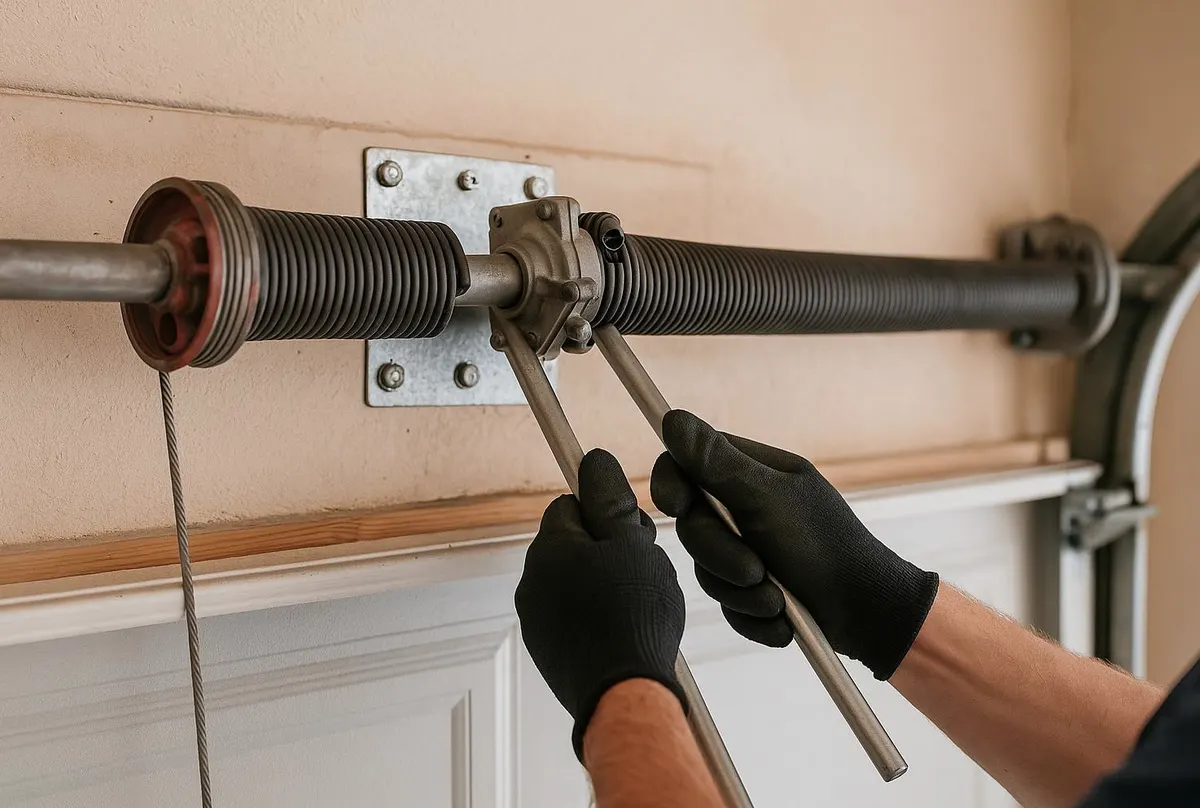
- Rust on or near the springs — this is the one to stop debating about. Rust weakens spring steel from the inside, and a spring under tension that's also corroded can fail suddenly, which is a real safety issue, not just an eyesore.
If you can scratch it off with a fingernail and see solid metal underneath, you're probably looking at the first category. If it's flaking in chunks or you see pitting, that's a different conversation.
Swelling and Warping: What's Actually Happening Inside the Panel
On wood or composite doors, swelling usually starts at the bottom panel because that's the part closest to standing water, melting frost, or a sprinkler that hits the door more than the lawn. Once moisture gets past the finish and into the wood fibers or the composite core, it doesn't dry evenly, so you end up with a panel that's thicker on one edge than the other. That's why the door starts rubbing against the frame or won't latch the way it used to. A door that's swollen in one spot but otherwise fine can sometimes be dried out, sanded, resealed, and saved. A door with swelling in multiple panels, or with the bottom rail starting to separate from the panel, is usually past the point where patching makes sense.
What Actually Helps, Not Just What Sounds Good
- Check the grading around the garage. If water pools against the slab instead of running away from it, that's feeding the problem every time it rains.
- Look at the bottom seal and astragal. A cracked or flattened seal lets water wick up under the door instead of blocking it.
- Keep weep holes clear on steel doors — these small drainage points are there specifically to let trapped moisture out, and they clog with dust easily in this climate.
- Repaint exposed metal and reseal wood promptly rather than waiting for a full dry season to pass, since each wet-dry cycle makes the damage a little worse.
- Avoid aiming pressure washers or hoses directly at panel seams when cleaning dust and smoke residue off the door — it forces water into joints that would otherwise stay sealed.
On cost trade-offs: spot-treating rust or resealing one swollen panel is a relatively small job. Replacing an entire door because of structural warping or widespread rust is a bigger investment, but it's often cheaper in the long run than repeated patch jobs on a door that's already failing in more than one spot.
When to Call Le Grand Garage Door
If the rust is anywhere near the springs, hinges, or rollers, or if a panel has swollen enough that the door doesn't close flush or latch properly, it's worth having it looked at rather than guessing. Our garage door repair team can tell you whether you're looking at a cosmetic fix or something that affects how the door operates, and if the springs are compromised, our spring replacement service handles that safely rather than leaving a corroded spring under tension. We also offer garage door maintenance visits that catch drainage and seal issues before they turn into swollen panels in the first place.
If your garage door in Le Grand, CA is showing rust, swelling, or just isn't sealing the way it used to, call Le Grand Garage Door and we'll come take a look and tell you straight whether it needs a fix or a replacement.