
The Move That Feels Right But Usually Isn't
When a garage door won't open, most homeowners head straight for the red emergency release cord. It's tempting because it looks like the obvious manual override — pull it, lift the door by hand, problem solved. But that cord disconnects the door from the opener trolley entirely, and if the real issue is a broken spring, you've just removed the one thing keeping an unsupported door from dropping. These doors typically weigh somewhere between 130 and 400 pounds depending on material and size. Pulling the cord before you know what's wrong can turn an inconvenience into an injury or a smashed vehicle. Before touching that cord, it helps to know what the symptoms are actually telling you.
What You're Seeing Points to Where the Problem Is
- Door doesn't move, opener is silent: usually a power issue.
- Opener hums or runs but the door stays put: often a disconnected trolley, broken spring, or stripped internal gear.
- Door starts to open, then reverses or stops partway: almost always the safety sensors or a limit setting.
- Remote does nothing but the wall button works fine: points to the remote itself, not the system.
- Door feels unusually heavy when lifted by hand: classic sign of a broken or weakening spring.
Keep these in mind as you read the list below — they're the shortcuts to figuring out where to start.
The Order a Technician Actually Checks
- Power supply. We check the outlet first, including whether a GFCI has tripped or a breaker has flipped. It sounds too simple, but it's the fastest thing to rule out before touching anything mechanical.
- Remote and wall control. Dead batteries, a weak antenna, or loose wiring at the wall button are common and cheap to fix. If one control works and the other doesn't, this is almost always the answer.
- Safety sensors. The two photo-eye sensors near the bottom of the track have to see each other in a clean, unbroken line. Dust buildup from a dry season, a spiderweb, or a sensor bumped out of alignment will stop the door from closing or cause it to reverse. We wipe the lenses and recheck alignment before assuming it's anything more serious.
- Manual release or disconnected trolley. Sometimes the cord was pulled accidentally, or the trolley arm has come loose from the opener carriage. Reconnecting it is quick, but only once we've confirmed the spring is intact.
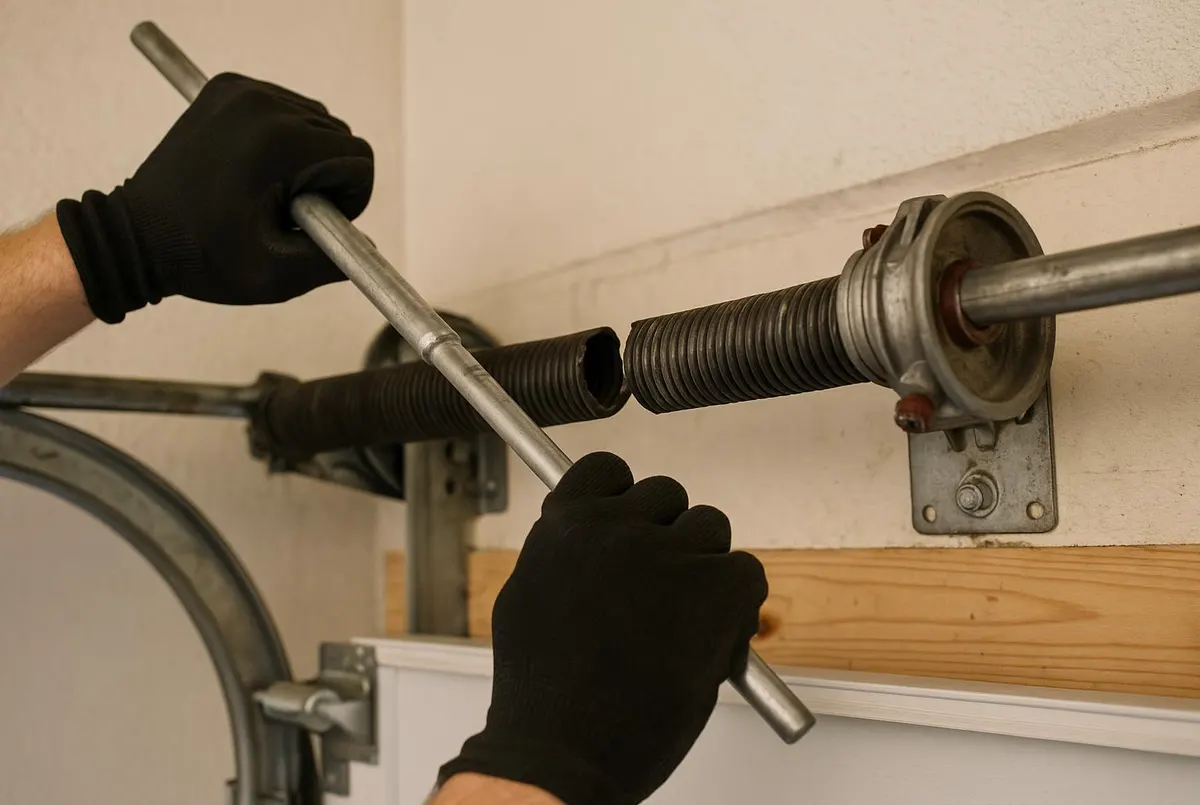
- Springs. This is where a heavy, hard-to-lift door usually leads. Torsion springs mounted above the door and extension springs along the upper tracks both lose tension over years of cycling, and a visible gap in a torsion spring means it's snapped. Spring replacement involves removing the old spring under controlled tension, installing the correct size and wind for your door's weight, and testing the balance — this is not a safe DIY repair given the tension involved.
- Cables and rollers. Frayed cables or a roller that's jumped the track can jam the door mid-motion. Years of exposure to winter rain can accelerate rust on hardware that isn't maintained, which is worth checking as the wet season sets in.
- Opener gears and limit settings. Older openers often have a plastic drive gear that wears out and strips, letting the motor run without moving the chain or belt. We also check the opener's travel limits, which can drift out of adjustment and cause the door to stop short or reverse.
When to Call Le Grand Garage Door
If you've confirmed power is fine, the sensors are clean, and the door still won't open, it's time to call. This usually means a spring has failed, cables are worn, or the opener itself needs attention — none of which are safe or practical to diagnose further on your own. We handle Spring Replacement and Garage Door Opener Repair & Installation regularly, and if your door is stuck shut overnight or stuck open and exposed to weather, our Emergency Garage Door Service covers that too.
If your garage door in Le Grand, CA isn't opening, give us a call before you force anything by hand. We serve Le Grand, Merced, Chowchilla, Planada, Atwater, Livingston, Winton, and Snelling, and we can usually tell you what's wrong over the phone before we even arrive.